Showing posts with label pâte brisée. Show all posts

Friday, 4 July 2014

Pie in July

This isn't National Cake Week, and today wasn't Pi Day, but I went ahead made a pie this morning anyway.  Because pie is delicious.  Also because it was the 4th of July and it seemed appropriate.


Strawberries and blueberries are in season (not to mention conveniently coloured) so I decided to make a strawberry-blueberry pie.  I used recipes from Joy of Baking and Martha Stewart as guidelines, and my recipe is in the Recipe Box.  It was really very tasty, but to say that it was runny would be an understatement; it was fruit soup on the inside.  I don't know if it hadn't had enough time to set when I cut into it, or if it needed more tapioca or cornstarch, but it would be worth adding more tapioca or cornstarch, or both... I was delighted, however, to find that despite all the juices there was no soggy bottom!  I think baking on a hot sheet might make quite the difference.


I used 1 1/2 times Martha's recipe for pâte brisée, and I was as happy with it this time as I was the last time.  There is probably more cutting to this pie than anything else, and it begins with the pâte brisée.  Chop up cold butter and cut it into the flour and salt mixture until it resembles a coarse meal.


Add 1/4-1/2 cup ice water to the dough just until it sticks together.  Split the dough in half to form two disks, cover them, and chill them in the refrigerator for at least an hour (I left mine overnight).  When it's ready roll one disk to about 1/8" thick and place it in a 9"-10" pie dish.  Spread a thin layer of butter over the bottom of the shell - this will form a barrier between the filling and the crust to prevent a soggy bottom - and return to the refrigerator.  Roll out the second disk and return it as well.


I made a new-to-me discovery while getting ready to make this pie: tapioca is 'ground arrowroot' in the UK.  At least I think it is.  While the tapioca my mom uses to firm up her pies is not ground, tapioca starch is the only ingredient in ground arrowroot so it seems to be the right thing.  I decided to give it a try anyhow.


Whisk the sugar, cornstarch and tapioca together and set it aside while you hull and cut the strawberries.  When the strawberries are all sliced up, mix them in a big bowl with the blueberries, and then stir the sugar mixture into the berries.  Let the berries sit about fifteen minutes, and while they're doing that take the disk of dough back out of the refrigerator and cut it into 1" strips.  When that's done, remove the pie dish, and pour the berries in.


Form a lattice on the pie, starting by laying half of the strips over top of it.  Fold back alternating strips, and lay another strip perpendicular over the remaining strips.  Unfold the folded strips back over the perpendicular strip.  Repeat until the lattice is complete.


Nearly lastly, beat an egg and brush it over the pastry, and then dust it with sugar sprinkles.  None of this step is necessary, of course, but it looks pretty and the sugar adds a nice crunch.


Then pop it in the oven!  Make sure, especially if you decide not to bake the pie on a baking sheet, that you cover the bottom of the oven with tin foil.  The pie will drip, and it will be a sticky mess.  A tasty, sticky mess.


And the best part?  This red, white and blue pie can do double duty: preheat your oven for Bastille Day, July 14th.

Sunday, 13 October 2013

My, my good ol' Apple Pie

I'll try to keep this post short and sweet, like a good pastry crust... (insert pity laughs here).  This week was National Cake Week, and in honour of the occasion (apart from entering the competition), I naturally decided to bake a pie.  Not a cake that looks like a pie.  An actual pie.  What can I say, I'm a baking rebel; it's just how I roll.

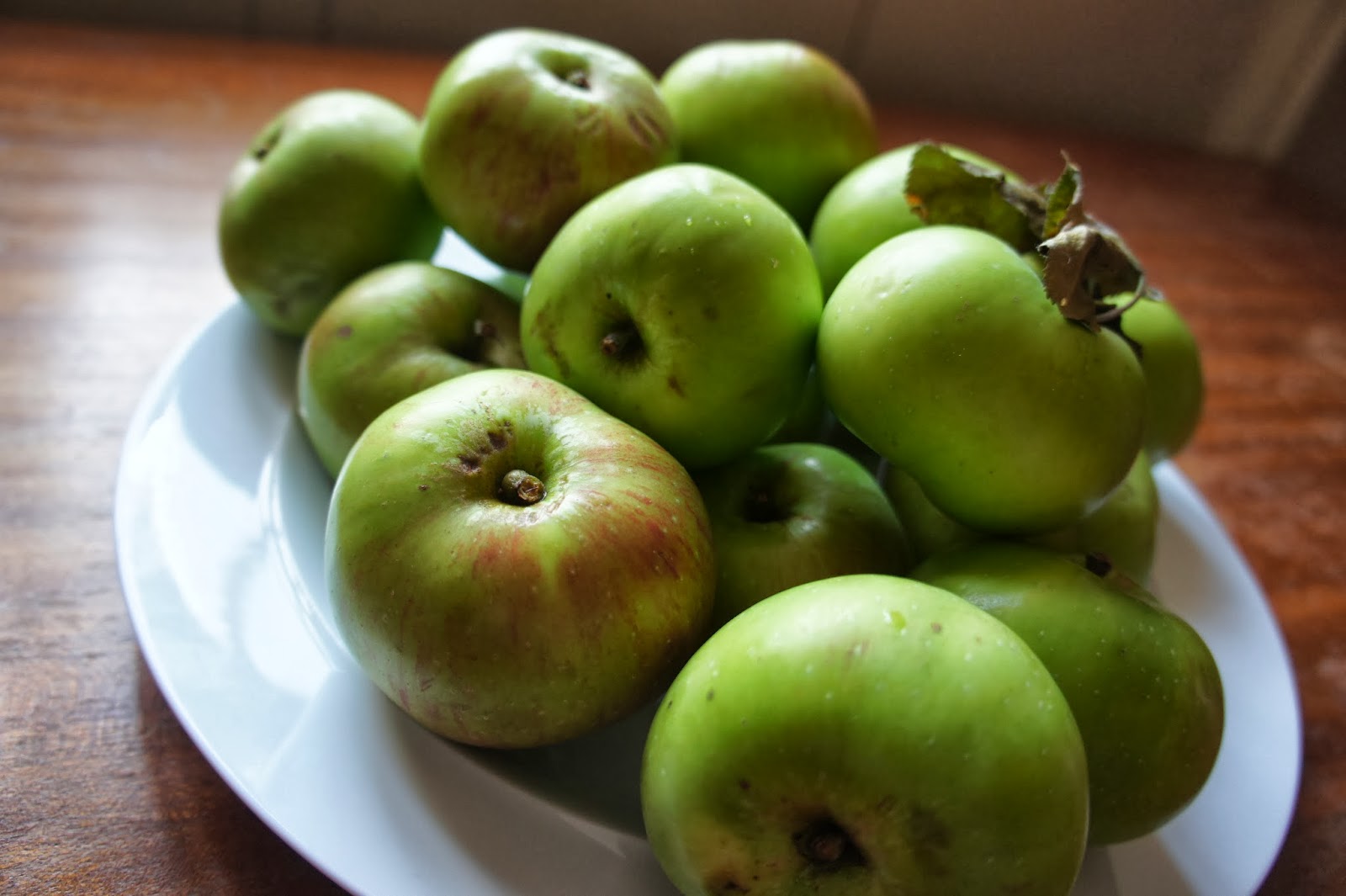
Rebellion was only half of the impetus for pie, however.  It's fall, harvest season, and my supervisor brought a couple sacks worth of apples from his tree into the department, of which I was happy to make off with a fair few.  What makes a better pie filling than free fruit?  Plus it has turned cold and drizzly outside, and there's nothing to counteract that wintry weather feeling like warm apple pie.


I asked my mom for her recipe for apple pie, which is consistently delicious, but since she explained the steps using phrases such as 'you add the sugar until it looks right', I thought it wise to look up a recipe with measurements for my first solo go at this pastry.  I picked Martha's Old Fashioned Apple.

I have a behemoth deep dish pie pan and so used one and a half times Martha's recipe for pâte brisée shortcrust pastry, but I ended up with extra dough at the end of the day and could probably have done with one times the recipe.  No worries though, I had extra apples leftover too, and all together had just the right amount of everything to make a small pie for breakfast yesterday morning...

The shortcrust was not too labour-intensive; the worst part of it was making room in my tiny tiny fridge to chill the top and bottom crusts once they had been rolled out.  I don't have a food processor so just cut the butter and flour mix by hand.  It's recommended to do this with a pair of knives, but since my mixing bowls are metal and I didn't want to scratch the one I was using to death I just used my hands.  The issue with this approach is that it warms the butter, which is undesirable as the flakiness of the pastry comes from the little bits of butter that remain in the cut dough; when the dough bakes these bits melt, creating holes in the structure of the dough and leaving it with that flaky consistency.  By using your hands you could warm the butter to the point of melting completely into the dough.  I therefore cut the cold butter into small pieces to begin with, tried cutting them into the flour a bit with rubber spatulas (a failure) and then was just careful to not work the dough too much.  Using my hands also meant the dough was holding together pretty well before I even added any water, so when it came to that step I added a bit less than recommended.  I chilled the dough in two pieces overnight, and was pleased in the morning to see it full of little specks of butter.


I rolled both pieces out to approximately 1/8" thick, rearranged my refrigerator, and chilled the very large discs while I set about peeling and cutting the apples and making the filling.


Martha's recipe calls for the juice and zest of one lemon, and while the zest might have added something I think the juice was primarily meant to prevent the sliced apples from browning.  The juice might have helped flavour-wise if I'd had very bland apples, but I didn't; mine were very tart and very juicy.  So since I like the apple filling to have a bit of colour anyway (and in any case it looks brownish once the cinnamon has been added) I skipped the lemon, and instead tossed in about a teaspoon of lime juice that I had on hand, just in case.  The apple-lime scent wafting off the apples before I mixed in the sugar and spices did smell enticing.

This brings me to one other departure that I made from the recipe, which was to whisk the sugar, cinnamon, nutmeg, cloves and flour together before tossing them with the apples, in order to prevent clumps and to get an even distribution of flavours over the apples.  If I had realized before baking just how much liquid really was in my apples, I would also have tossed in about a tablespoon of corn starch to firm the filling up a bit.  I did this for my breakfast pie and it really helped.  When cutting the first pie, however, even after cooling for an hour, the juice in the filling poured out of the slices and into the pan, and I've watched enough Great British Bake Off now to develop an eye twitch at the mention of a soggy bottom.  Nobody wants to see that.


It looked nice in the pan though!  The top crust needed to have air vents cut in, but I wanted to make it a bit more decorative and to expose some of the filling, so I cut shapes freehand with the blunt side of my knife before covering.  To get the centre right, I marked a circle about the size of the top of the pie into the dough using a plate.  The line was faintly visible going into the oven, but not coming out.  I also topped it not with granulated sugar but with thicker sugar crystals, which gives the top a nice crunch - my mom's trick.


I baked at the temperature and for the time called for by the recipe (375F/180C, for about an hour), but about a half hour in thought the top was browning too rapidly, so I covered it with foil to deflect some of the heat.  Then I checked it ten minutes later and took it off, and ten after that put it on again.  I suffer from indecisiveness.


The pie was not too tart, and not too sweet.  (I was especially glad of the latter, because I disagreed with Paul Hollywood when he said in this Bake Off series that American pies are too sweet; I say he's been eating the wrong pies).  The pie was, I think, a nice contrary choice to celebrate National Cake Week.